
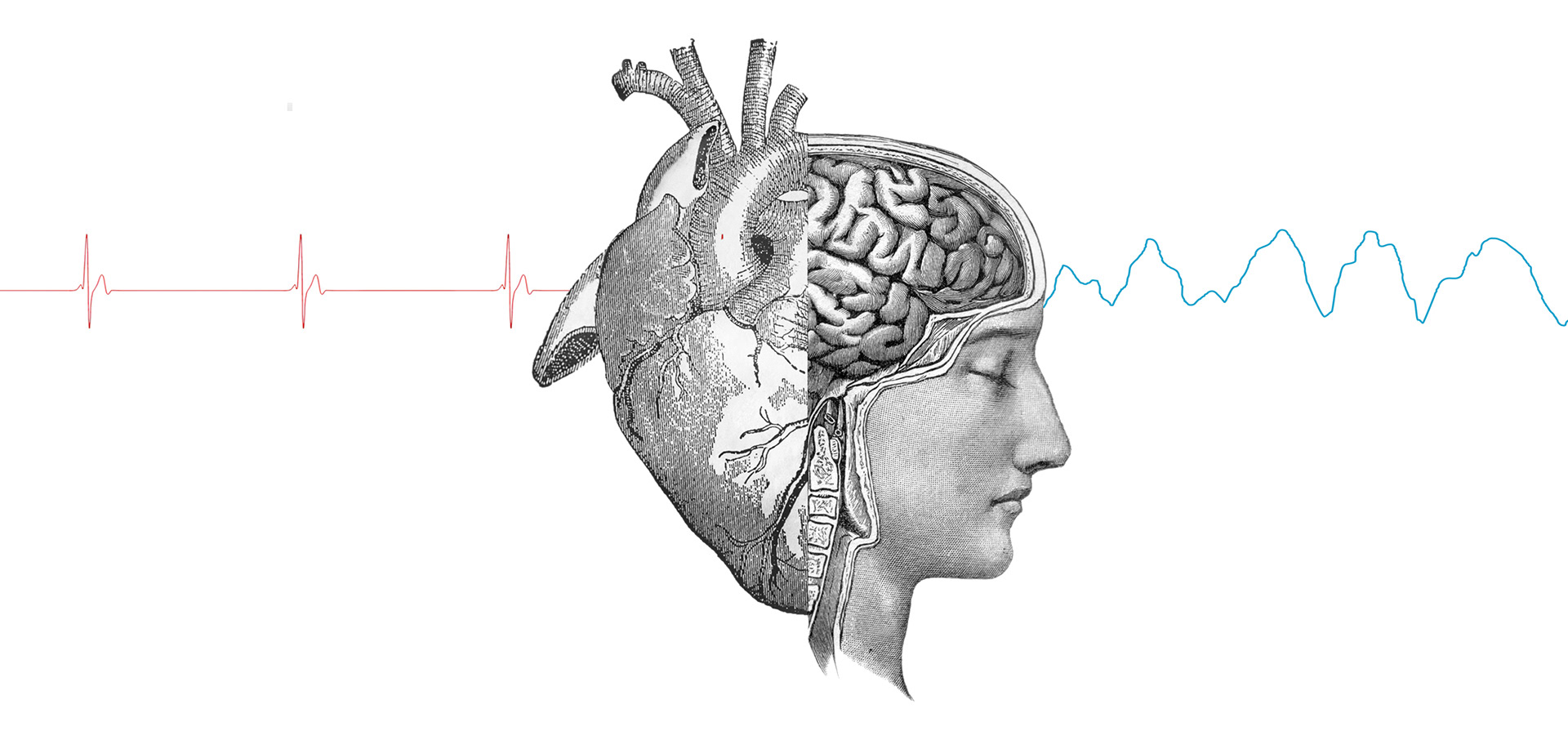
CEREBRUM
As Aristotle teaches, “the brain is of a colder nature, whereas the heart is warmer. For this reason, the brain is positioned higher than the heart, so that the rising warmth from the heart can ease the coldness of the brain.”
The brain has always fascinated humans. The most famous drawings of the brain from the Middle Ages come from Andreas Vesalius. These were the first realistic depictions of its structure. The human brain resembles an inflated walnut in appearance and has the consistency of a soft-boiled egg, weighing about 1.4 kilograms. However, it possesses the most complex cellular structure one can imagine. More than one hundred billion nerve cells work together within it.

Object A
This artifact represents the integration between human brain activity and mechanical interaction. It is designed to be controlled by the electrical impulses generated by the brain, which are captured and amplified through an electroencephalography (EEG) system. Its main mechanism consists of a lightweight structure made of metallic filamets, connected to a central motor. The motor receives the amplified EEG signals and translates them into precise movements of the structure, enabling the user to manipulate the device only through their level of concentration.

COR
On Greek, Roman, and Christian tombs in the catacombs, the ivy leaf appears as a symbol of eternal love — that is, love beyond death. Ivy leaves that anticipate the heart shape we recognize today. It is believed that this is a later interpretation of the earliest medical depictions of the heart, from the Hippocratic school, which used a pyramidal form to describe the organ. Later, Arab physicians adopted this iconography. In visual art from the 12th to the 14th centuries, ivy leaves appear in scenes of love, soon rendered in the color red — the color of warm blood, which has long symbolized life, happiness, health, and love.

Object B
In this case, we explore the relationship between the human heart and mechanical form. With the help of an electrocardiogram (ECG), electrodes are placed on the body to capture the heart’s electrical activity. These signals serve as the input that animates the artifact, amplifying the cardiac signals and translating them into organic movements of the structure. This allows the user to visualize and perceive their own heartbeat in a new and tangible way.
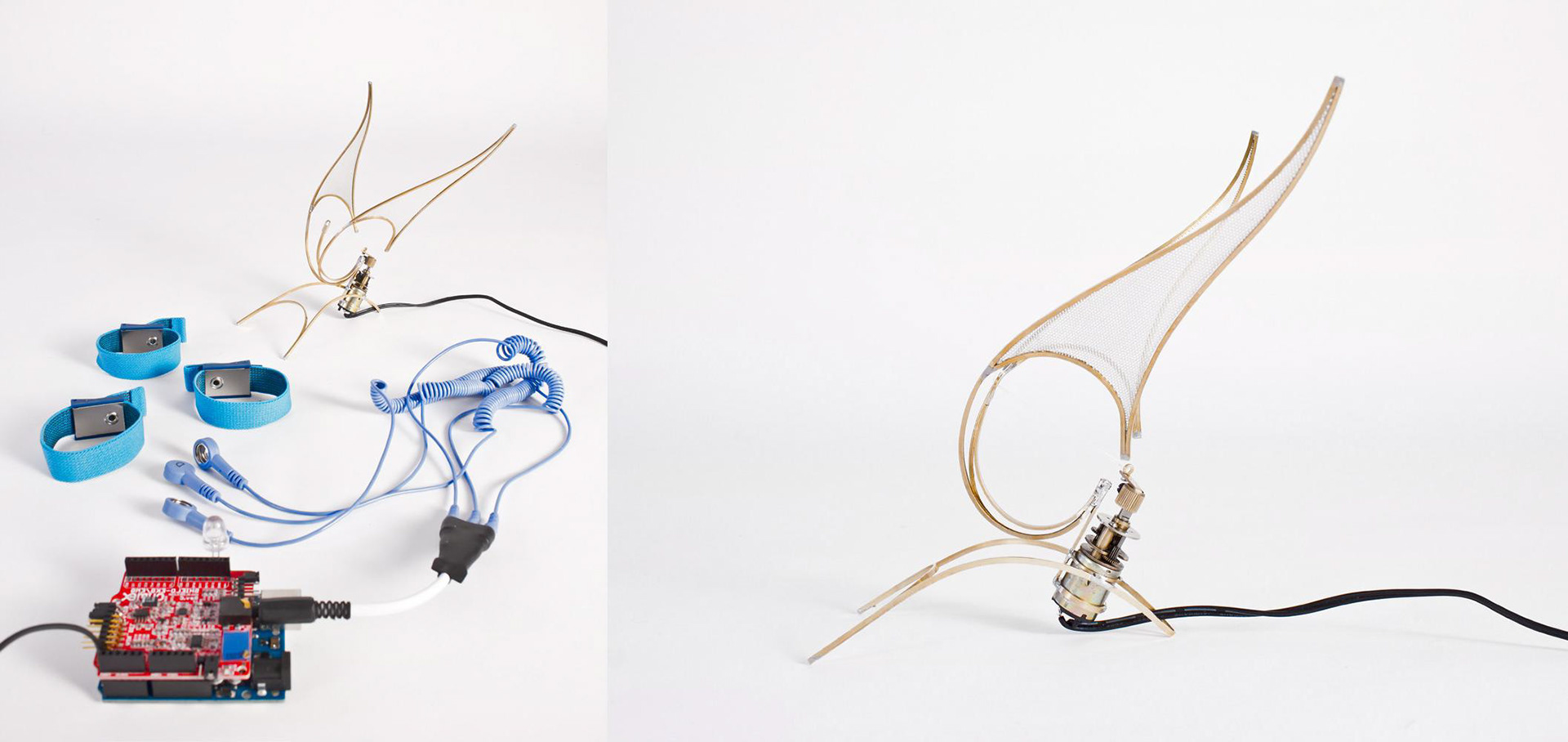
Brain and Heart are brought to speak...
The brain and the heart give us the gift of feeling, and they share a deep biological connection through the autonomic nervous system (ANS). Just as the brain sends electrical impulses, the heart can respond and provide feedback to the brain. In this way, the two organs maintain a close and important communication. For example, when the brain reacts during moments of exertion, this excitation directly affects the heart, causing the heart rate to rise.
The Performance
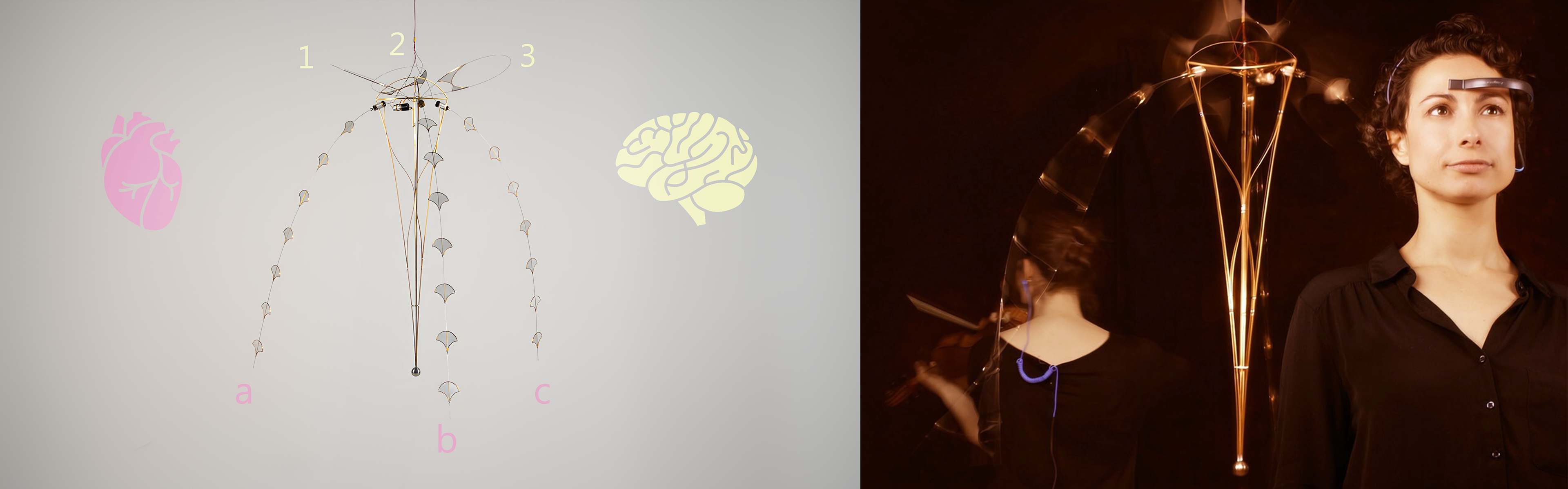
Takes place in a space with two participants. The first person is connected to an electrocardiogram (ECG) and plays the violin, generating the melody that will be perceived by the second person. The second person is connected to an electroencephalogram (EEG) and listens attentively to the music produced by the first.
At the center of the space is an interactive sculpture, inspired by the principles of biomimicry, designed to simultaneously collect the heart and brain signals of both participants. The collected data —the second person’s brain activity and the first person’s cardiac activity— is processed in real time and transformed into kinematic movements that unfold across different parts of the sculpture.
Through these movements, the sculpture acts as a medium of connection and symbiosis between the two people, integrating the music, the brain response, and the cardiac response into a single visual and sensory experience. In this way, a physical representation of the interaction between the brain and heart of different individuals is achieved, united and harmonized within the sculpture.

The viewer’s reaction is left to their discretion. This will be the true surprise. They can find their own interpretation of the sculpture. They have the option to blend the sculpture with their memories and thoughts, or even unite everything within themselves, thus triggering feelings such as tension, joy, fear, calm, and so on. The experiment brings the brain and the heart into dialogue, letting both dance through the motion of living sculptures.

"The question of what our lives might look like when surrounded by objects capable of interacting with and responding to our consciousness has fascinated our imagination for a long time. This idea — once considered futuristic or even fantastical — is now beginning to form part of our everyday reality. This convergence between technology and emotion invites us to reconsider our environment not merely as passive tools, but as active participants in our cognitive and emotional lives."


